SPECIAL PROGRAMMING
cijaru: Reclaiming the Margins — Contemporary Art, Craft, and the Mediterranean
Lecture
September 8, 2026, 5–7 p.m.
This talk presents cijaru, the Puglian nonprofit contemporary art initiative founded by Francesco Scasciamacchia and Davide De Notarpietro, as a curatorial project rooted in the specific geopolitical condition of Italy’s far southeast. Rather than treating Puglia as a peripheral territory, cijaru considers its marginality as a productive position from which to reactivate histories of exchange, mobility, and cultural encounter. Located between the Adriatic and Ionian Seas, the region has historically functioned not as an endpoint, but as a crossroads connecting Italy with the Balkans, Greece, Turkey, and the wider Mediterranean.
The talk proposes historical memory as a form of contemporary practice: an attempt to recover and reactivate the knowledge, materials, techniques, and forms of exchange that once made this territory a key Mediterranean site. Particular attention will be given to the relationship between contemporary art and local craftsmanship, drawing on the legacy of the British Arts and Crafts movement and William Morris’ idea of the “joy in labour”—the possibility of reconnecting making, knowledge, dignity, and collective life.
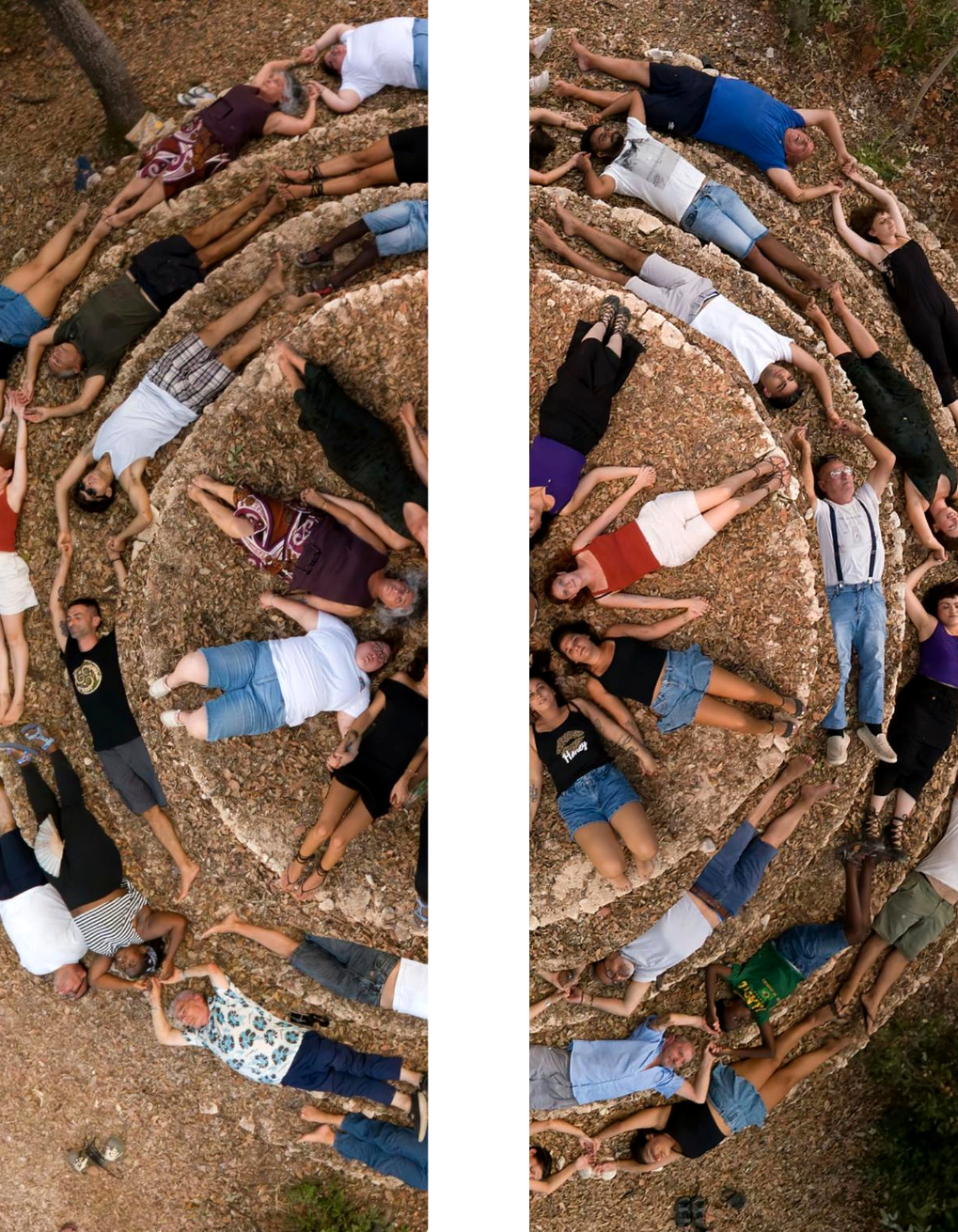
Three moments in cijaru’s trajectory will serve as case studies: Maria D. Rapicavoli’s Make This Earth Home (2020), presented at Torre Matta in Otranto; Maria Papadimitriou’s Non-existing Paradise (2021), in the same historic site; and Chiara Camoni’s work developed in collaboration with Teatro Koreja in Lecce. The talk will conclude with the recent project. Fantasmi by Nico Angiuli, developed in Casamassella, explores how contemporary art can create a relational space in which established social roles, identities, and everyday rhythms are temporarily suspended, allowing new forms of inhabiting the village and relating to its surrounding landscape to emerge.
Through these projects, cijaru asks how art can move beyond representation of a place toward the reactivation of its social, material, and historical potential.